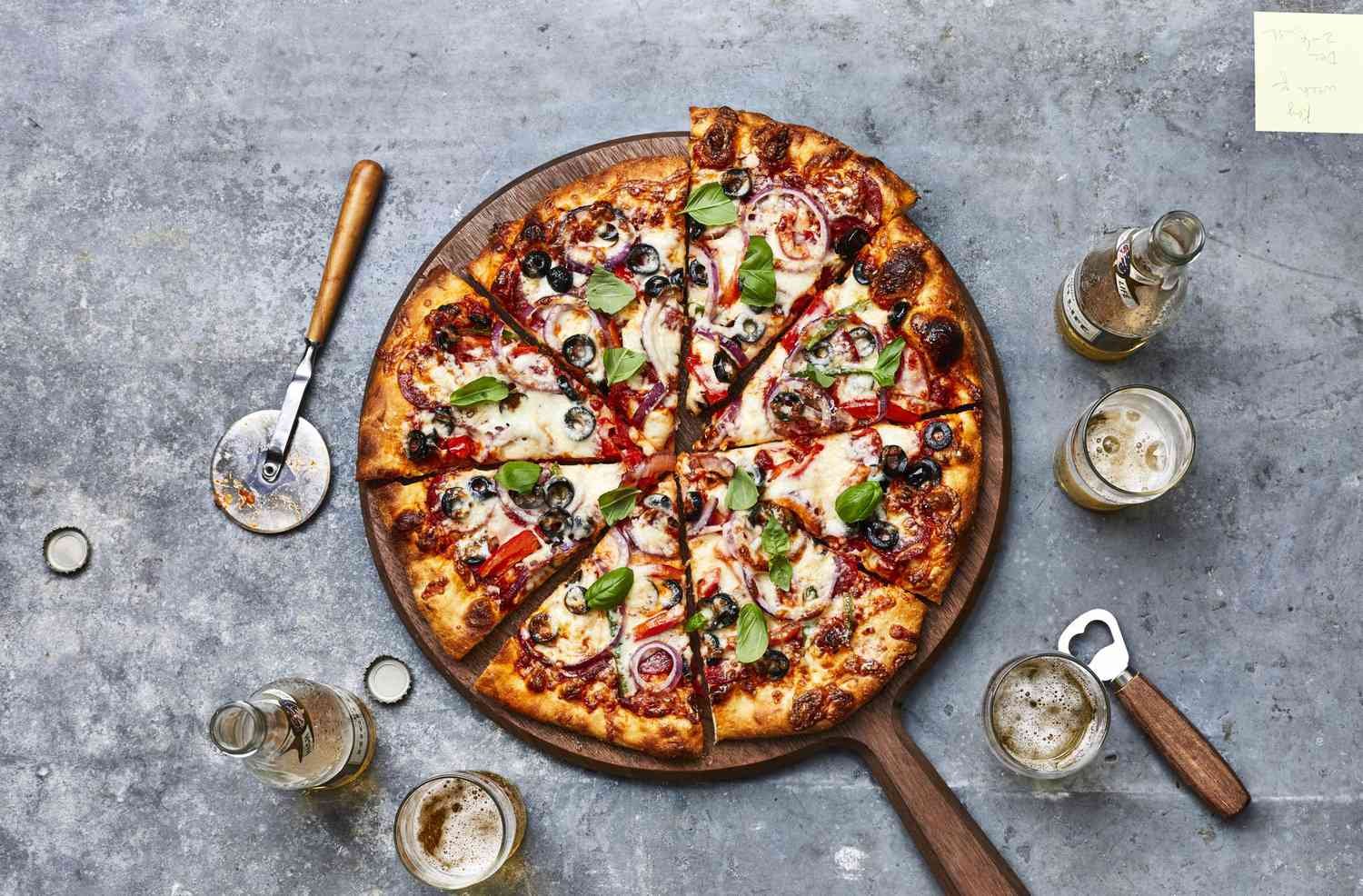
Welcome to the ultimate pizza hub, where we turn your kitchen into a pizzeria. Whether you’re a fan of a classic Neapolitan, a crispy New York slice, or a thick and cheesy Detroit-style pie, this guide covers it all. From the perfect dough to mastering your oven, we’ll help you create a pizza that rivals your favorite local spot.
The Art of the Dough: Your Foundation for Greatness
Every great pizza begins with a great dough. The fundamental recipe is simple—flour, water, salt, and yeast . But the real magic lies in the technique. For a truly flavorful crust, consider using a “poolish,” or pre-ferment. This involves mixing some of the flour, water, and yeast the night before and letting it ferment. This process builds complex, gassy flavors that are the essence of an exceptional pizza . For beginners, a simple one-hour dough works beautifully, while more advanced bakers can explore sourdough starter or recipes that use both commercial and instant yeast for experimental results .
Quick Dough Recipe
This is your starting point for a classic homemade pizza .
- Ingredients:
- 2 cups all-purpose flour (plus extra for dusting)
- 1 tsp salt
- 1 tsp sugar
- 1 tsp instant yeast
- ¾ cup warm water
- 1 tbsp olive oil
- Instructions:
- In a large bowl, mix the flour, salt, sugar, and yeast.
- Gradually add the warm water and olive oil, stirring until the dough begins to come together.
- Transfer to a floured surface and knead for 7–8 minutes until smooth and elastic.
- Place the dough in a greased bowl, cover, and let it rise for about 1 hour, or until doubled in size.
- Punch down the dough to release the air, then roll it out into your desired pizza shape .
Classic Pizza Styles to Master
The world of pizza is vast and diverse. Here’s a look at some of the most celebrated styles you can recreate at home .
🍕 Neapolitan
The Italian classic is all about simplicity and high-quality ingredients. It features a thin, soft, and chewy crust with a slight char from a wood-fired oven, topped simply with San Marzano tomatoes, fresh mozzarella, and basil .
🍕 New York-Style
Known for its large, wide slices and a crust that’s perfectly foldable. It’s thin but chewy, with a generous layer of mozzarella and a tangy tomato sauce that holds up to the “big, bold, and indulgent” American style .
🍕 New Haven-Style
This style from Connecticut is famous for its “coal-fired” flavor and a thin, charred crust. The dough is rolled thin, topped minimally, and baked on a steel and under a broiler to achieve a crisp texture and a bit of color .
🍕 Detroit-Style
A thick, rectangular pan pizza with a crunchy, cheese-crisped crust. In a quintessential Detroit pie, the cheese is often layered under the sauce, creating a unique texture and flavor profile .
🍕 Tavern-Style
This is a Midwestern favorite, characterized by its crispy thin crust and square slices. This style was popularized in taverns and cut into small pieces to be served on napkins, encouraging guests to snack while enjoying a drink .
Pro Tips for the Perfect Pie
- Oven Setup: Crank your oven to its highest setting—500°F or more. A pizza stone or steel is essential for a crispy bottom crust . If you prefer a softer crust, bake your pizza on a baking sheet instead of directly on the oven rack .
- The Stretch: Instead of tossing the dough in the air (which can knock out the gases that create airiness), gently stretch it on the back of your knuckles or let gravity do the work. Keep the dough dry to avoid it sticking .
- Don’t Overload: A common mistake is adding too many toppings. Less is often more! Too much sauce, cheese, or toppings can make the crust soggy and compromise its structural integrity .
- The Reheat: The microwave is the enemy of a good slice. To reheat pizza, use a toaster oven or, even better, a cast-iron skillet on medium-high heat on the stovetop .
Frequently Asked Questions (FAQ’s)
Q: How is Italian pizza different from American pizza?
A: Italian pizza focuses on simplicity, tradition, and high-quality ingredients. The crust is thin, soft, and chewy, and the toppings are minimal and fresh (like tomatoes, mozzarella, and basil). American pizza is bolder, with a thicker, chewier crust (like New York-style) or a crispy pan crust (like Detroit-style), and is often loaded with a variety of toppings .
Q: What’s the best way to reheat cold pizza?
A: For the best results, use a toaster oven or a cast-iron skillet on the stove top over medium-high heat. Avoid the microwave, as it makes the crust rubbery .
Q: Can you have too much cheese on a pizza?
A: Yes, it’s very possible. While cheese is delicious, overloading it can compromise the pizza. Pizza is a flatbread with condiments, and if you pile on too many, the dough won’t have enough strength to support it .
Q: Why is my pizza crust coming out too hard?
A: This can happen if you bake a pizza directly on the oven rack. To achieve a softer crust, try baking it on a baking sheet instead .
Q: Is pizza considered “junk food”?
A: Not necessarily. A well-made pizza with fresh ingredients like tomatoes, vegetables, and lean meats can be part of a balanced diet. It becomes less healthy when loaded with processed meats and eaten in excess .
Q: Why do round pizzas come in square boxes?
A: Square boxes are cheaper, easier to produce, and more efficient to stack and store. While it may not be a perfect fit for the pizza, it’s the most practical and cost-effective option .
Q: Does a calzone count as a pizza?
A: While it’s essentially a pizza folded in half and baked, it is often considered “pizza’s cousin” rather than a true pizza .
The Verdict
Pizza is more than just a meal; it’s a passion project. From the pre-ferment in your dough to the perfect ratio of sauce to cheese, every step offers a chance to refine your craft. So, gather your ingredients, choose your style, and get ready to experience the satisfaction of crafting the perfect pizza in your own kitchen.